

Ice battery applications
Choose your application for the explanation. When an ice battery is used as a heat pump source, it works a little differently. When the heat pump needs to heat something, something else (the heat source) has to be cooled. We use the ice battery for this. Thanks to the phase change, the ice battery can feed a heat pump source with energy for a long time.
Process industry
Your process, for example cooling your (agricultural) product, uses a lot of energy. This cooling can only be done with electricity; the cooling has to run 24/7, but the sun shines for only 12 hours a day.
You need cold, for example to cool milk, vegetables or chemical products. Your goal is not to store electricity. Your goal is to cool the process!
On warm days, the ice battery also gives a boost. Your cooling installation runs at 100% and cannot cool any further, while your process heats up. With the ice battery you can still cool enough during these peaks.
With our storage, we turn the energy peak directly into cold. That saves one energy conversion, so it is more efficient.

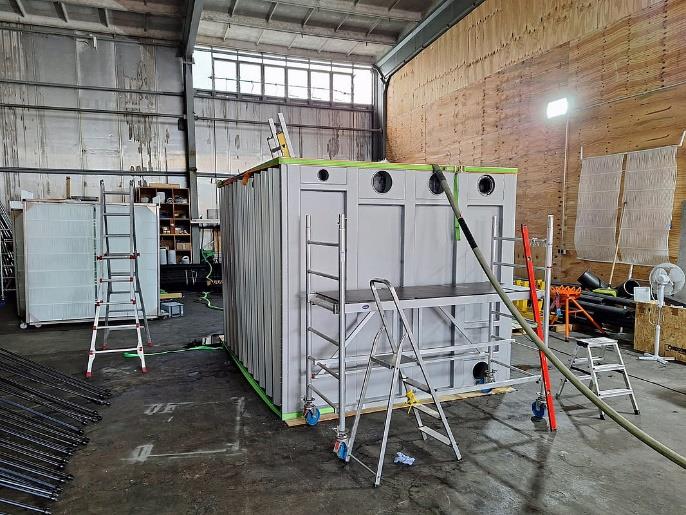
Reference project: Brunner KA-GE AG, Bassersdorf (Switzerland)
A vegetable growing and processing company in its third generation. A solar installation and an ice battery make energy-efficient operation possible.
- What we delivered: design, production and on-site assembly of an ice battery in a container
- Technology: ice battery type sp.ICE 10′
- Storage capacity: 1,000 kWh
- Charging time: 8 hours
- Charging power: 125 kW
- Commissioned: 2025
Building climate control
Climate change and the predicted warming of the planet make efficient solutions for cooling buildings and entire residential districts increasingly important. Energy-efficient air conditioning has become an essential part of designing new buildings. Conventional air conditioning systems, however, need considerable amounts of energy to produce cooling, especially on hot summer days. They reach their limits when it comes to reducing energy costs and the environmental impact of air conditioning.
Ice batteries offer new possibilities and savings potential: they can absorb peaks in cooling demand and, as a storage system for ‘cold energy’, temporarily store a surplus of energy from renewable sources. These and other properties make ice batteries attractive for climate control in buildings.
The solar energy from your office building can make the ice build up cheaply at the weekend, so your employees can work at their best during working hours!

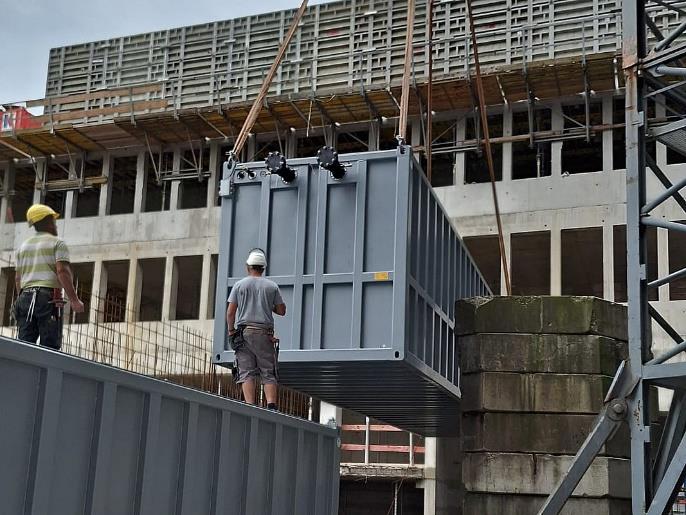
Reference project: Materna, Dortmund
IT service provider with more than 4,000 employees and its headquarters in Dortmund. A compact ice battery provides the air conditioning of a new office building.
- What we delivered: design, production and delivery of three ice battery modules for the air conditioning of an office building
- Technology: high-performance ice batteries type sp.ICE 40′ and sp.ICE 10′
- Storage capacity: 10,000 kWh
- Charging time: 8 hours
- Charging power: 1,250 kW
- Commissioned: 2023
Heating and cooling networks
Grid congestion challenges planners, managers and owners of residential buildings, hospitals, industrial complexes and other infrastructure projects to find heating and cooling solutions that are both economically and ecologically feasible.
Modern heat pump systems are a key technology for the energy transition, but using them well depends largely on a climate-friendly and efficient energy source, and on heating and cooling temperatures that do not differ significantly from the average indoor temperature. Where geothermal probes or groundwater heat pumps often come with legal requirements or geological limitations, ice batteries offer a flexible, sustainable and powerful alternative.
Ice batteries meet the requirements of two-stage district heating
Ice batteries are an ideal heat source for cold district heating networks, because they allow decentralised supply of efficiently usable, environmentally friendly energy. Unlike conventional district heating systems, which run at high temperatures, so-called fifth-generation district heating and cooling uses very low temperatures (typically 5-20 °C). This reduces heat loss and allows renewable energy sources to be integrated optimally.
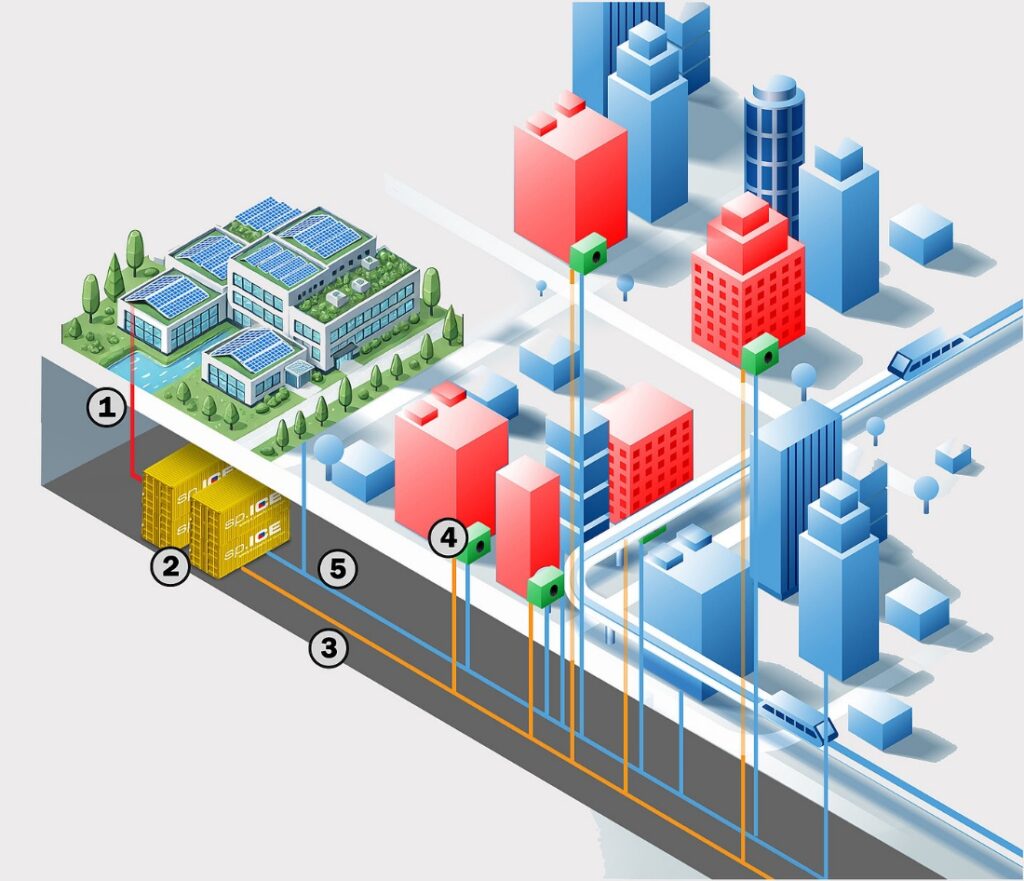
Diagram: district heating and cooling network with ice storage
- Process residual heat from solar thermal energy, PV surplus or industrial waste heat
- sp.ICE ice storage for flexible, temporary storage of surplus energy
- The heating circuit supplies low-temperature district heating to the connected buildings (usually 5-20 °C)
- Heat pumps use the low temperature of the local heat to generate heating energy efficiently. At the same time, cooling energy is produced.
- The cooling energy from the cooling circuit can be used for building cooling or industrial process cooling
Integration as a shuttle or seasonal storage system
Ice batteries can be used in cold and heat networks, either as a short-term shuttle storage system or as a seasonal storage system for long-term use of ambient energy.
Ice storage as a shuttle storage system
Ideal for locations with daily or weekly fluctuations in demand for heating and cooling (e.g. commercial buildings, office buildings, data centres).
Storage and supply of energy in short cycles, for example by using a surplus of solar energy (PV) or residual heat.
Ice storage as seasonal storage
Long-term storage of ambient energy across the seasons, where surplus heat generated in summer is kept for use in winter.
Ideal for residential districts, hospitals or universities that aim for a sustainable annual energy balance.
In a heating and cooling network, one central installation cools several buildings. Such an installation grows with the number of connected buildings. The ice battery is modular: several modules can easily be connected in parallel hydraulically, so your cooling capacity grows with your project.
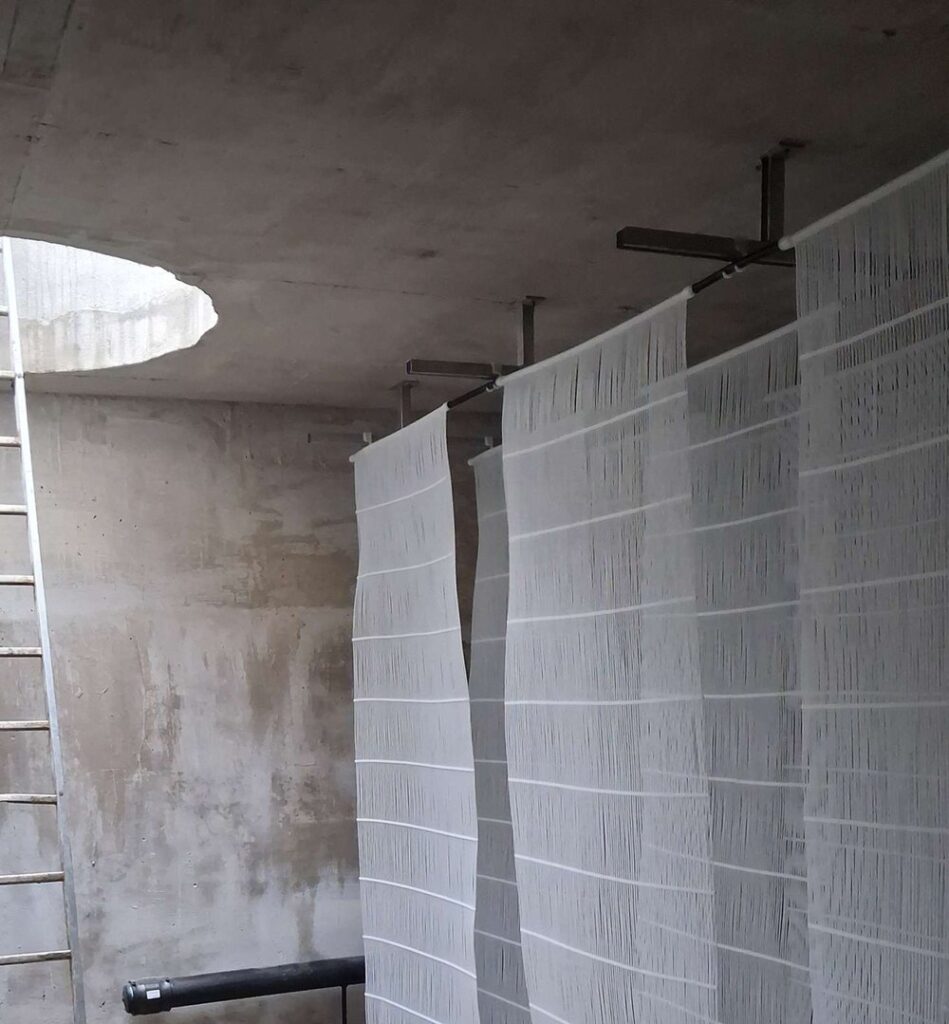
For large installations, we build in situ in a concrete tank. With 40ft modules in a concrete tank, transport costs are lower and installation is fast. That makes it more economical for large installations.
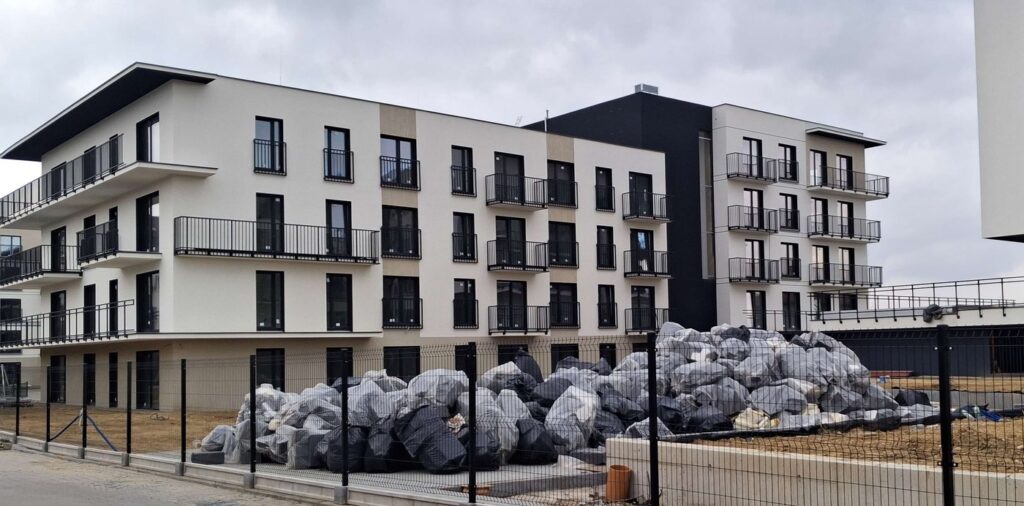
Reference project: Nowy Sącz, Poland
Ice battery for a residential block: energy-efficient heating and cooling based on ambient heat in combination with the ice battery. It gives lower CO2 emissions and passive cooling in summer.
- Client: Dabrovski Instalacje
- What we delivered: turnkey delivery, from engineering to start-up
- Technology: in situ assembled ice battery
- Storage capacity: 28 MWh
- Charging capacity: 110 kW
- Installation: 2026
Emergency cooling
Some spaces depend heavily on a reliable cooling supply and continuous cooling. Think of operating theatres in hospitals, server rooms, data centres and certain industrial installations. In pharmaceutical production, even small temperature fluctuations can make entire batches of medicine unusable.
In a data centre, a cooling failure can cause servers to shut down and become unavailable. In such temperature-sensitive environments, emergency cooling is usually provided. As a backup cooling system, ice batteries offer several advantages over conventional chillers.
- The ice battery can easily be integrated into existing cooling systems.
- The ice battery needs little maintenance.
- Fire safe.
- Ice batteries do not use refrigerants that harm the environment.
An ice battery stores cold as ice. For emergency cooling, cold is available immediately. The full capacity is available as long as the tank is at 0 °C.
The required power depends on the discharge time. A sp.ICE-20′ delivers, for example, 397 kW for 6 hours and 238 kW for 10 hours. A sp.ICE-40′ delivers 827 kW for 6 hours.
Reference project: HIP Heidelberg Innovation Park
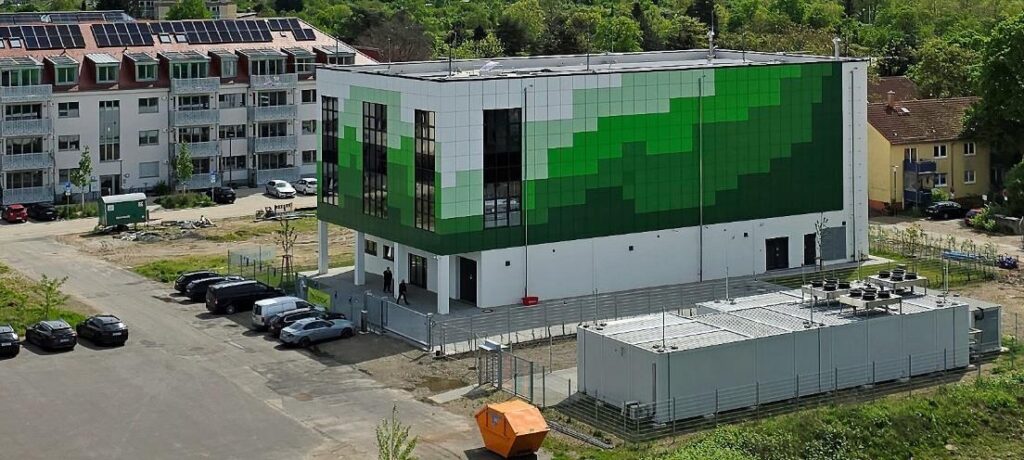
Green data centre cooling, cold network supply and emergency cooling. With the help of the ice battery, the green data centre runs on 100 percent renewable electricity.
- What we delivered: design and production of two ice batteries, with on-site assembly and commissioning, including hydraulic module, steel structure and piping
- Technology: 2 high-performance ice batteries type sp.ICE INSITU and 1 hydraulic module sp.ICE HC 33′
- Storage capacity: 20,000 kWh
- Charging time: 10 hours
- Charging power: 2,000 kW
- Commissioned: 2023
Is your situation not among these? We are happy to think along with you.